

J&S HOUSEHOLD explores Kitchen Cabinets Modern Wood design trends in today's evolving interior layouts, where frameless structures are increasingly shaping how modern kitchens are planned, assembled, and experienced in daily life. This shift is not only about appearance but also about space efficiency, usability, and material performance in contemporary homes.
Modern kitchen design has moved away from heavily segmented cabinet structures toward cleaner, more continuous surfaces. Among these changes, frameless construction has become a defining approach for wood-based cabinetry systems, especially in urban housing where every centimeter of storage matters.
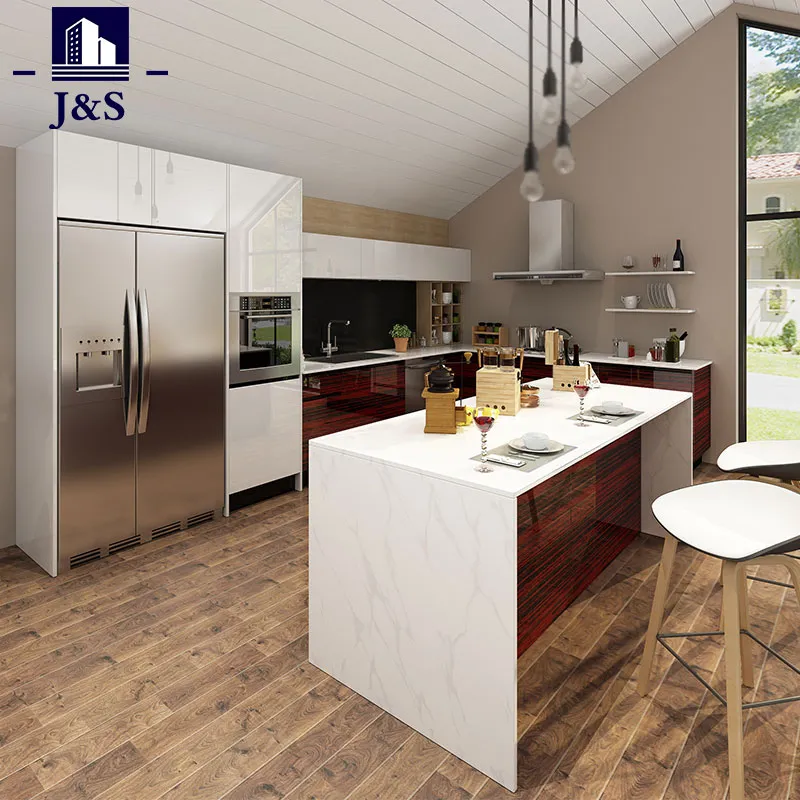
Frameless cabinet construction, often referred to as "full-access" design, removes the traditional face frame found in older cabinet styles. This allows drawers and shelves to extend across the full width of the cabinet box.
In Kitchen Cabinets Modern Wood layouts, this structure supports a more streamlined visual flow. Without visible framing, wood surfaces appear more continuous, emphasizing grain patterns, finishes, and natural tones.
From a functional standpoint, frameless designs offer more internal space. This becomes particularly relevant in compact kitchens where storage optimization is a priority rather than a luxury.
Wood has long been valued for its stability, texture, and adaptability. When used in frameless cabinet systems, it behaves differently compared to framed configurations.
Key structural advantages:
- Better utilization of interior cabinet width
- Simplified alignment for drawers and shelving systems
- Cleaner visual transitions between cabinet units
- Reduced material layering at the front face
In Kitchen Cabinets Modern Wood applications, these advantages allow wood surfaces to be appreciated without interruption. Instead of decorative framing, the material itself becomes the focal point.
Wood panels used in modern systems are typically engineered for dimensional stability, helping them maintain shape even when cabinet spans are wide and uninterrupted.
The decision to use frameless construction is not purely aesthetic. It is often based on spatial logic and user behavior inside kitchens.
Traditional framed cabinets reduce usable interior width due to the face frame structure. Frameless designs eliminate this constraint, offering a more efficient storage footprint.
Wider openings make it easier to reach stored items, especially in deep base cabinets and tall pantry-style units.
Flat surfaces and uninterrupted wood textures align with modern interior preferences, especially in open-plan living spaces.
| Feature | Framed Construction | Frameless Construction |
| Internal Space | Reduced due to frame | Fully usable width |
| Visual Style | Segmented, traditional look | Clean, continuous surface |
| Drawer Access | Slightly restricted opening | Full extension possible |
| Material Emphasis | Frame dominates appearance | Wood surface becomes focus |
| Layout Flexibility | More rigid structure | More flexible configurations |
This comparison highlights why frameless systems are increasingly paired with Kitchen Cabinets Modern Wood designs in modern interior planning.
Wood surfaces behave like natural visual textures that respond strongly to continuity. When cabinet fronts are uninterrupted, grain direction and color consistency become more noticeable.
Visual effects commonly observed:
- Horizontal grain lines appear longer and more unified
- Painted wood finishes look smoother and more modern
- Natural wood tones feel less segmented and more architectural
This design approach also supports hybrid layouts, where open shelving and closed storage coexist without visual disruption.
Beyond aesthetics, frameless construction changes how kitchens function in everyday routines.
Items can be arranged more freely inside cabinets without being restricted by frame boundaries. This is especially useful for cookware, pantry goods, and appliances that require wider clearance.
Flat internal edges reduce dust accumulation points. Smooth transitions inside cabinet boxes make cleaning less complicated compared to framed interiors.
Modern hinge systems and drawer slides integrate more efficiently with frameless structures, allowing soft-close and full-extension features to operate more smoothly.
Wood-based frameless cabinets rely heavily on structural engineering rather than external reinforcement. Panels are typically designed with:
- Reinforced side walls for load distribution
- Precision-cut edges for tight joining
- Moisture-resistant surface treatments
- Stable core materials to reduce warping risk
These technical elements ensure that Kitchen Cabinets Modern Wood systems maintain durability even under frequent daily use.
| Factor | Impact on Performance |
| Panel Thickness | Influences structural stability |
| Edge Finishing | Affects moisture resistance |
| Joinery Precision | Determines long-term alignment |
| Surface Treatment | Enhances durability and appearance |
| Load Distribution | Supports heavy kitchen storage |
Each factor contributes to the overall reliability of frameless cabinet construction, especially in wood-based systems where natural material behavior must be carefully balanced.
Contemporary kitchen spaces are no longer isolated cooking zones. They often connect directly to dining and living areas, making visual consistency more important than ever.
Frameless wooden cabinets help maintain that continuity. Without visible structural interruptions, cabinetry blends more naturally into surrounding interiors.
In Kitchen Cabinets Modern Wood environments, this approach supports a calmer visual experience, reducing cluttered impressions even when storage volume is high.
Open kitchens demand flexible design logic. Frameless systems allow cabinets to align seamlessly with islands, wall panels, and built-in appliances.
Common integration patterns:
- Wall-to-ceiling storage without frame breaks
- Island units with continuous wood wrapping
- Hidden storage behind uniform cabinet fronts
- Mixed open and closed shelving systems
This flexibility is one reason frameless construction has become widely associated with modern wood cabinetry systems.
One of the practical reasons frameless wood cabinets are favored is their ability to maintain consistent alignment over time when properly engineered.
Wood panels used in these systems are often stabilized through controlled processing methods that reduce expansion and contraction. This helps maintain smooth door operation and consistent spacing between components.
In daily use, this means fewer visual shifts and a more stable structural appearance over time.
Frameless construction has become closely linked with modern wood cabinetry because it aligns structural efficiency with visual clarity. It improves usable space, simplifies interior access, and enhances the natural appearance of wood surfaces without unnecessary segmentation. As kitchen environments continue to evolve toward open layouts and multifunctional living spaces, this design approach remains highly relevant in both practical and aesthetic terms. Within this context, J&S HOUSEHOLD continues to develop and refine Kitchen Cabinets Modern Wood solutions that reflect these changing spatial and material expectations while maintaining consistency in design and production standards.


