


Yes. You can replace the visible fronts while retaining the cabinet boxes, provided those boxes are sound, square enough for consistent reveals, and suitable for the hinges and drawer hardware you plan to use. Ordering kitchen cabinet doors and drawer fronts only can remove much of the demolition from a renovation. It does not, however, fix swollen panels, a poor layout, failing drawer systems, or inaccurate measurements.
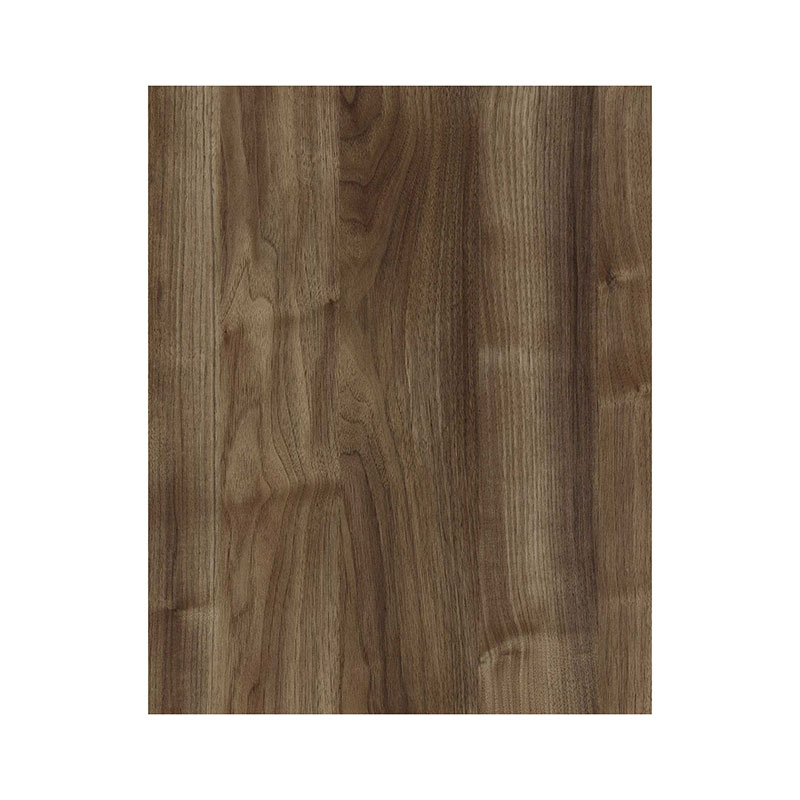
Yes—front-only replacement works when the cabinet boxes, layout, and hardware mounting points are still usable
The 2026 answer is governed by the same physical facts as any successful refacing job: the retained parts must be worth retaining. Inspect the boxes before choosing a color or door profile. Open every cabinet, remove a few drawers, and look at joints, shelves, backs, hinge areas, sink-base panels, and exposed edges.
Good candidates: sound boxes, a layout worth keeping, and a primarily visual update
Front-only replacement makes sense when the cabinets are firmly attached, doors and drawers operate without binding, and the kitchen already has workable storage and appliance positions. Cosmetic wear is not automatically a problem. Scratched doors, dated colors, damaged edge banding, and a style you no longer want are exactly the conditions refacing is meant to address.
It is also practical when custom cabinet fronts can be prepared for the existing hinge pattern or when the hardware can be replaced without weakening the box. A slab-door update, for example, may produce a major visual change while leaving countertops, plumbing, flooring, and cabinet interiors undisturbed.
Replace or repair more than the fronts when boxes are damaged, out of square, poorly configured, or affected by moisture
Swelling around a sink or dishwasher, crumbling fastener holes, separated joints, sagging shelves, persistent odor, and visible mold call for investigation beyond the fronts. A new door can hide damage for a while; it cannot restore the holding strength of a deteriorated cabinet side.
Check alignment, too. If paired doors cannot be adjusted to produce an even center gap, the box may be racked or badly installed. Replacing hinges sometimes helps, but fronts should not be used to disguise a structural problem. Full or partial cabinet replacement is usually safer when the current layout blocks appliance clearances, wastes critical storage, or would require extensive patching merely to accept new hardware.
Measure the existing fronts and openings separately before specifying overlay, gaps, and hinge boring
Measure twice, but do not record only one type of measurement. Existing front dimensions tell the supplier what is there now. Opening dimensions and cabinet construction reveal how those fronts relate to the box. Both records are needed to identify mistakes before production.
Record each finished door and drawer-front size instead of assuming the opening size is the order size
A cabinet opening is rarely the same size as its door. The difference depends on whether the cabinet is face-frame or frameless, how much the front overlays the box, the intended gaps, and whether two doors share one opening. Measure every finished front individually and identify width and height clearly. Do not assume nominally identical cabinets have identical fronts; fillers, end panels, site modifications, and earlier repairs can create small but consequential differences.
Use a unique position code for every piece and mark it on a kitchen elevation or plan. Keep door dimensions separate from drawer-front dimensions. If a drawer bank has fronts of different heights, record their top-to-bottom order rather than sending three unlabeled sizes.
Document cabinet type, overlay, door pairs, hinge locations, boring details, grain direction, and handle holes
Hinge preparation is where many otherwise accurate orders fail. Record the hinge brand and model if identifiable, the cup and screw-hole arrangement, the hinge side, and the location of each bore relative to the finished door. Never assume that two concealed hinges with similar appearances use interchangeable mounting patterns.
For each front, document these items:
- face-frame or frameless cabinet construction;
- full, partial, or inset relationship to the cabinet;
- single doors, left-right pairs, and required finished gaps;
- grain or pattern direction, especially across adjacent fronts;
- handle-hole count, spacing, orientation, and location; and
- finished edges and any edge that requires special treatment.
If you are changing from knobs to pulls, old holes may remain visible in retained panels or false fronts. Resolve that detail before approving the order, not during installation.
Compare melamine, thermofoil, lacquer, and acrylic by finished construction—not the surface name alone
The surface category does not describe the whole front. Substrate, thickness, edge treatment, backing, finish system, and machining all affect appearance and service behavior. J&S Household presents melamine, thermofoil, lacquer, and acrylic as cabinet-door categories, with particleboard, plywood, MDF, and HMR among the listed base-material options. The company also lists 9, 15, 16, 18, and 25 mm thickness options and PVC or aluminum edge treatments. Those choices should be confirmed as a complete construction rather than selected independently.
| Door category | What to verify before ordering |
|---|---|
| Melamine | Substrate, visible edge treatment, color reference, pattern direction, and matching back surface |
| Thermofoil | Profile limitations, edge coverage, back construction, and suitability near heat-producing appliances |
| Lacquer | Color sample, sheen, edge finish, substrate preparation, and acceptable color variation |
| Acrylic | Gloss or matte appearance, substrate, edge construction, protective-film handling, and scratch expectations |
There is no universally best material. Melamine replacement cabinet doors can be practical for cost-controlled projects, while lacquer or acrylic may be chosen for a particular visual result. The right comparison is between approved finished samples and documented constructions—not category names on a quote.
Most replacement failures trace back to mixed measurements, incompatible hinges, unapproved colors, or unclear edge details
Common symptoms are predictable: paired doors meet in the center, drawer fronts collide, hinge cups break through an edge, handle holes appear on the wrong side, or a white finish looks noticeably different beside retained panels. These are usually specification failures rather than installation mysteries.
Avoid combining opening sizes and finished-front sizes in the same unlabeled column. Do not approve color from a screen image; review a physical sample when color matching matters. Photographs help explain the project, but they do not replace dimensions, finish references, or boring instructions.
Edge details deserve their own line in the specification. An exposed PVC edge, an aluminum edge, and a wrapped or coated edge produce different joint lines. If the quote says only “white slab door,” the order is not defined well enough for production.
A single-kitchen refacing order and a bulk contractor program require different approval, packaging, and production plans
A homeowner or remodeler ordering one set of made-to-measure kitchen cabinet doors can approve pieces by room and cabinet position. The main risks are field measurement, matching retained finishes, and preventing damage during delivery.
Wholesale kitchen cabinet doors and drawer fronts require tighter revision control. Contractors should establish a repeatable position-coding system, approved samples, drawing status, packaging labels, replacement-part procedures, and rules for mixing lots. Packaging by unit, floor, room, or installation sequence can save more labor than packaging by size alone.
For bulk custom cabinet doors and drawer fronts, confirm who owns the final dimensions: the field measurer, contractor, distributor, or manufacturer. An approval signature has little value if nobody knows which drawing revision it covers.
The safest quote brief identifies every front, exact construction, finish reference, hardware preparation, quantity, evidence request, and delivery requirement
A usable quote brief should include a numbered front schedule; finished width and height; door or drawer-front designation; substrate, thickness, surface, back, and edge construction; approved color and sheen reference; grain direction; hinge and handle preparation; quantity; and packaging code. Add drawings, site photographs, or physical samples where they resolve ambiguity. State what you expect to approve before production, such as a sample, shop drawing, or first article.
Also identify the delivery address, access constraints, requested packing sequence, and process for reporting shortages or transit damage. J&S Household supplies cabinet fronts to builders, developers, wholesalers, retailers, project partners, and end users, so the order documents should reflect the needs of the actual buyer and installation team.
So, can you replace just the doors and drawer fronts in 2026? Yes—if the boxes and layout are serviceable, every front is measured and identified separately, and the finished construction and hardware preparation are approved before production. If the boxes are wet, weak, badly out of square, or no longer fit the kitchen, replacing more than the fronts is the safer decision.