

High-gloss cabinet fronts look striking on day one. By month six in a working kitchen, micro-scratches from cleaning cloths, fingernails around edge pulls, and steam near the rangehood begin to tell an entirely different story. Most glossy cabinet surfaces fail prematurely not because the core rots, but because the exterior surface hardness sits at an inadequate 1H or 2H pencil rating. The result is a hazy, spiderwebbed facade that loses its mirror clarity under task lighting. If you import, build, or specify kitchen packages for residential developments, surface abrasion and edge peeling represent the bulk of punch-list callouts and warranty claims.
The shortest path to resolving this wear pattern is simple: specify a surface with a certified 3H-4H pencil hardness rating bonded with zero-joint edge processing. A Seamless Acrylic PETG Panel for Kitchen projects bridges the gap between the brittle delicacy of standard lacquered paint and the industrial look of high-pressure laminates.
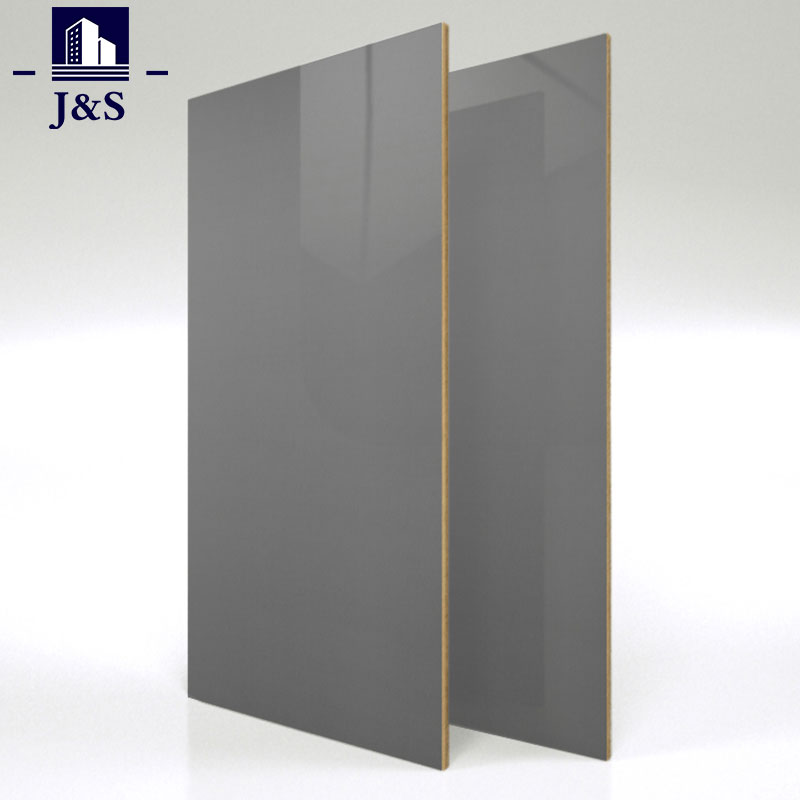
Builders and developers often view cabinet fronts as a finished aesthetic line item. In reality, they are mechanical wear surfaces subjected to thermal swings, grease, acidic splatters, and continuous cleaning abrasion.
Standard high-gloss films, including budget PVC foils and lower-grade acrylic sheets, typically test at pencil hardness levels around 1H to 2H. When a homeowner wipes down an oily splatter using a standard microfiber cloth containing fine airborne grit, the friction is enough to score the topcoat. Over time, daylight hitting the island cabinets at an angle exposes widespread micro-abrasion. What was specified as a mirror-gloss focal point becomes a dull, marred surface that cannot be buffed out without clouding the plasticizer.
Worse than surface scratches is the failure of the joint line. In conventional panel fabrication, standard EVA hot-melt adhesives apply the edge tape. EVA glue reactivates at temperatures as low as 140°F (60°C). Position an under-cabinet toaster, an electric kettle, or a dishwasher venting steam directly beneath an EVA-banded door, and the adhesive line softens. Moisture penetrates the open glue seam, swelling the internal substrate. Once an edge band begins to lift or show a dark, glue-stained dirt line, the panel cannot be repaired on site; it has to be replaced entirely.
Pencil hardness measures surface scratch resistance under ASTM D3363 testing protocols, moving up a scale from soft B grades through HB, and into hard H ratings. Standard automotive clear coats sit around 2H. A rating of 3H to 4H means the panel resists gouging and scratching from sharp everyday objects like keys, pet claws, and abrasive scouring pads used in domestic cleaning.
At J&S Household, panels achieve this durability through a cured top layer laminated over a co-extruded PETG (Polyethylene Terephthalate Glycol) foundation. The surface provides extreme scratch resistance while the PETG core maintains impact flexibility, meaning the panel will not crack or craze when cut or drilled during hardware installation.
Equally critical is the elimination of the glue line. Using automated German HOMAG edge-banding machinery, the panels undergo zero-joint edge fusion. Instead of running a thick, moisture-vulnerable glue reservoir that leaves visible seams, the edge band is permanently welded to the face material. The outcome is continuous perimeter sealing that acts as an impermeable barrier against cooking vapor and ambient moisture.
However, practical trade-offs exist. While 3H-4H acrylic PETG stands up to severe horizontal and vertical daily wear, it is not impervious to point-impact gouging from heavy cast-iron cookware. If struck hard enough with a sharp metallic edge, the substrate beneath can dent even if the acrylic skin remains unbroken. It is a resilient protective skin, not armor plate.
Acrylic inherently possesses exceptional optical clarity and light transmittance, rivaling structural glass without the dead weight. In modern kitchen schemes featuring layered under-cabinet LEDs, angled toe-kick strips, and integrated ceiling channels, this optical depth creates a clean, three-dimensional mirror effect. Matte or low-clarity composites absorb light unevenly; high-grade acrylic reflects it cleanly, making compact multi-family layouts feel visually expansive without requiring complex mirrored splashbacks.
When selecting materials for large-scale multi-family or custom builds, buyers typically weigh three core surfacing options: High-Pressure Laminate (HPL), standard Thermofoil (RTF), and seamless acrylic PETG. Each brings specific functional limits.
| Performance Criterion | Seamless Acrylic PETG | High-Pressure Laminate (HPL) | Thermofoil (RTF / Vinyl) |
|---|---|---|---|
| Scratch Hardness | 3H to 4H rating; resists cleaning grit and micro-scratches. | High surface wear, but prone to visible hairline crazing on dark gloss finishes. | Low (1H-2H); easily scratched by regular cleaning and utensils. |
| Edge Seam Vulnerability | Zero visible seam; completely sealed via HOMAG machinery. | Visible brown edge core lines unless mitred or explicitly edge-banded with glue seams. | Seamless over face and edges, but unglues on the back when exposed to heat. |
| Heat & Steam Resistance | High stability; no glue reservoir to melt near dishwashers. | Excellent face resistance; edge banding remains subject to standard adhesive limits. | Poor; pulls away, shrinks, and discolors near ovens and kettles. |
| Visual Depth & Reflection | True high-gloss mirror clarity with deep optical refraction. | Slight orange-peel texture common on high-gloss sheets. | Dull reflection; plasticky sheen under direct lighting. |
Thermofoil continues to draw entry-level budgets because of its low unit cost. But for developers looking to reduce five-year tenant turnover repairs, thermofoil edge-curling creates continuous replacement expense. HPL delivers extreme impact strength, yet it struggles to deliver an authentic high-gloss finish without visible edge lines or optical distortion. The high gloss seamless acrylic cabinet fronts strike the exact middle ground: flawless optical reflection paired with commercial-grade scratch durability.
A flawless exterior is only as good as the wood-fiber foundation holding it flat. Warped doors ruin kitchen alignment, bind soft-close hinges, and produce unsightly gaps across long cabinet runs. For multi-family and commercial imports into the United States, structural stability and emissions compliance dictate whether a shipment clears customs or creates severe legal liability.
The substrate options must match the humidity and load requirements of the specific project:
For US importers, compliance with formaldehyde emission caps is non-negotiable. Importing cabinetry fabricated from uncertified adhesives invites direct border holds by US Customs and steep fines under EPA TSCA Title VI. Our panels are produced using certified CARB-2, E0, and E1 compliant cores, validated by independent testing through SGS, CQC, and CNAS accredited laboratories. Specifying compliant MDF or plywood at the factory level ensures panels release negligible volatile organic compounds (VOCs) during transit and post-installation occupancy.
Sourcing container volumes or custom-sized cabinet components from overseas requires careful technical screening. Small finishing shops frequently claim to supply seamless doors, but lack the continuous automated equipment needed to prevent panel delamination and batch-to-batch color shifts.
When vetting a manufacturing partner for bulk orders, evaluate four critical operational criteria:
If you are planning upcoming multi-family developments or updating your wholesale catalog with resilient, high-gloss finishes, review the technical specifications of our wholesale PETG acrylic panels for cabinets to ensure your next installation stands up to everyday wear.


